Capturing Curiosity at the Bad Bunny Superbowl
2026-01-20
As we begin 2026, we’re reflecting on a year that sharpened Harmony Labs’ focus on researching and reshaping society’s relationship with media, and on helping partners turn that understanding into action. With this year’s launch of our Narrative R&D Lab and Deep Story Survey System, we significantly expanded our capacity to deliver best-in-class media research and to translate that research into winning strategy and implementation. Across this work, four themes point to how we’re evolving as an organization: deepening our audience-first approach, reaching people through organic media, building bridges between research and practice, and expanding our work internationally as media flows across borders.
Across projects, we saw that the most effective research connects what people believe, how they see themselves, and what media they actually consume. Treating these as one connected system (rather than separate inputs) reveals what kind of stories will actually work and ultimately helps guide creative and strategic decisions for our partners.
Our always-on Deep Story survey system links people’s most closely held beliefs with their real media consumption, producing richer audience insights than standalone surveys and surfacing the underlying stories audiences use to make meaning.
Through story testing with Democracy2076 we found that entertainment narratives can consistently move audiences toward pro-democracy attitudes—but only when the story’s hero and arc align with how each audience imagines systems change.
We launched, with support from Gates Foundation, the Narrative R&D Lab, a three-year effort to build experimentation infrastructure that helps issue-based social change fields tell stories that move society toward positive, pluralistic futures. We partnered with Accelerate Change and BuzzFeed to pressure-test a lightweight content-testing loop that turns audience hypotheses and insights into testable content with faster measurement, without bespoke research builds.
Our collaboration with PBS Digital Studios translated audience insights into YouTube-native content tools and strategies, proving that research can fuel creativity when it caters to how creators and media-makers actually work.
With National Geographic Society’s Impact Story Lab, our values-based segmentation revealed an “exploration gap”: many people already see themselves as explorers, but lack stories that recognize them as such—leading Nat Geo to experiment (with award-winning success!) on new animated formats that were used to reach new, previously untapped audiences.
We’re also applying this audience-first approach in building a framework to help Equimundo engage men and boys as allies in gender equality.
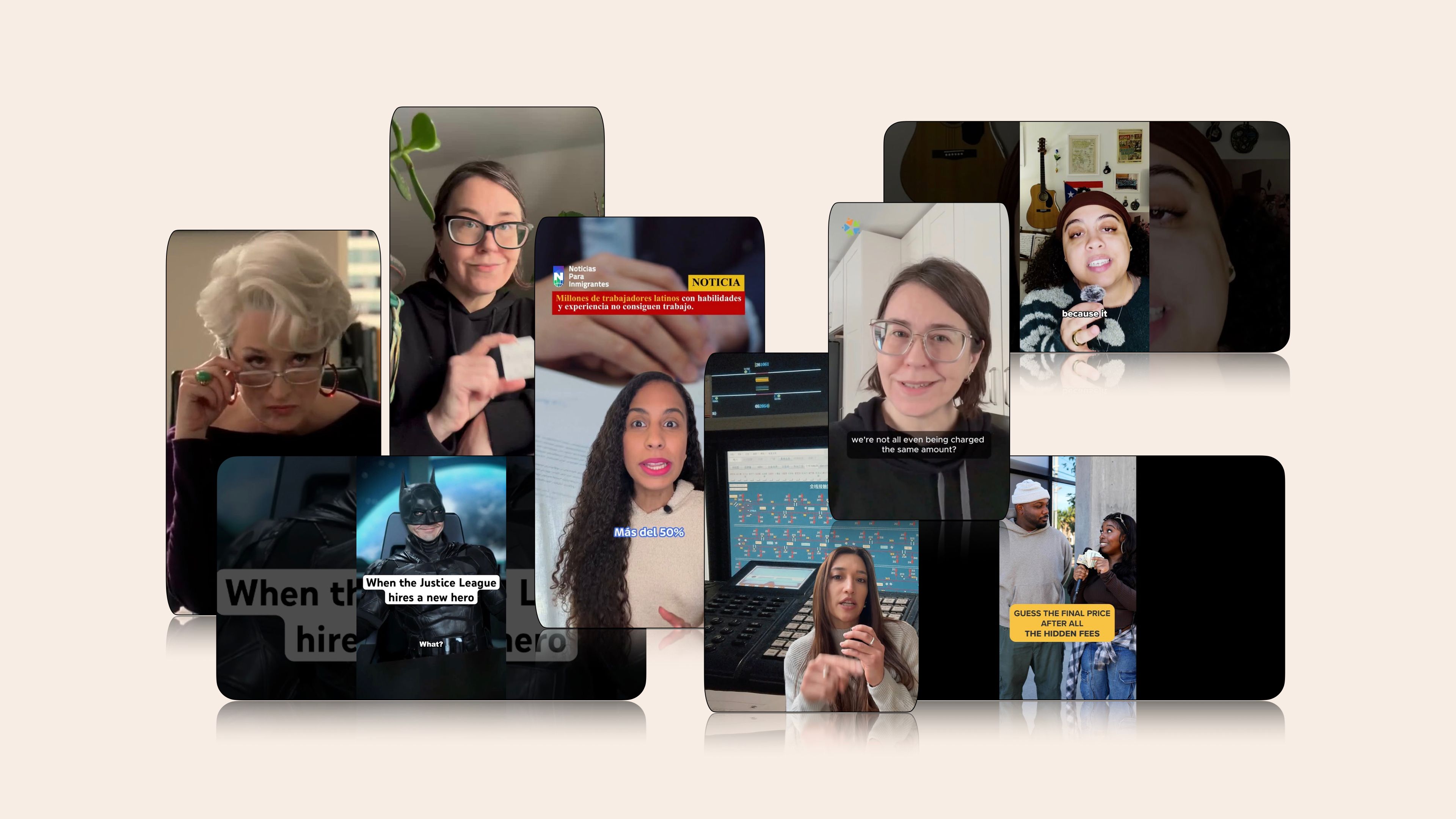
Across issue areas, we found that audiences increasingly get their information from individual creators, not institutions, news outlets, or advocacy campaigns—underscoring the need to meet audiences in the cultural spaces they already inhabit. Our updated Narrative Observatory climate audiences showed that untapped audiences, many of whom avoid news and traditional advocacy, can still be reached through creators and cultural spaces like fitness, food, and lifestyle.
Through an evaluation of MrBeast’s #TeamWater campaign, in partnership with campaign co-founder Matt Fitzgerald, we’ll be examining how creator-led campaigns can help environmental and climate advocates move beyond fundraising toward organizing, mobilization, and sustained cultural impact.
With the American Academy of Pediatrics (AAP), in partnership with FrameWorks Institute, we’re studying vaccines, trust, bodily autonomy, and related issues to inform a shift in their cultural strategy away from top-down public health messaging and toward trusted messengers and everyday creators as the basis for narrative interventions.
Our mapping of thousands of YouTube videos and news stories for the Mellon Foundation revealed that while humanities enrollments may be declining, the humanities is thriving in cultural contexts. The findings point to new, non-academic entry points for narrative intervention to reach younger audiences.
Research insights only go as far as the systems and shared practices that can act on them. Across our work, we’re prototyping different types of infrastructure that address this challenge and begin to build that shared practice.
Through the Narrative R&D Lab, we’re building experimentation infrastructure—systematic testing capacity that helps organizations diagnose what narrative approaches will work before committing to full production. Our community-driven narrative goal development process was a first step in that direction.
With the Robert Wood Johnson Foundation’s Mindsets Consortium, we’re participating in and learning from a community of practice working to develop shared narrative goals and coordinate strategies for shifting mindsets on health equity and structural racism. We saw how alignment across organizations can accelerate progress, especially when supported by systematic processes for developing common strategic ground.
For the Democracy Communications Collaborative, we’re developing application infrastructure—an audience-narrative framework designed to translate research into coordinated communication strategies that strengthen democracy support across the field.
Media narratives do not respect national borders, nor even often cultural and language barriers. That’s why this year we expanded our work to encompass international projects. Our first international project with the Climate and Land Use Alliance (CLUA) and ClimateWorks Foundation examined narratives around energy transition materials across three information domains (news media, policy, and industry communications) and nine countries (Canada, Chile, DRC, Germany, Indonesia, Mexico, Peru, Portugal, USA) and included a messaging experiment (launching in early February) to explore how to move diverse national audiences toward support for a just energy transition.
Another ongoing international project with the Potential Energy Coalition is generating a values-based audience segmentation for climate communicators across six G7 countries.
By studying the global creator campaign #TeamWater, we’re learning how creator-driven advocacy can scale globally, and how global creator networks can mobilize audiences faster than traditional institutions.
We made major investments in a more durable data and testing infrastructure, which continues to push us into new territory, helping us track audience effects over time, analyze faster, and serve partners with more flexible tools. This includes a unified study database and the ability to directly connect to content partners’ media analytics. The improvements enable dozens of simultaneous surveys and integrated tracking of beliefs, media consumption, and media effects. We also stood up our own campaign monitoring infrastructure for #TeamWater, including creator platform analytics, for what we anticipate will be the most impactful campaign we’ve ever supported. All of this positions us to support larger, faster, more impact-oriented media interventions in 2026.
Together, these technical investments and our work with partners in 2025 mark a meaningful expansion in our strategy and implementation capacities. As a result, we’re entering 2026 ready to do work that is more responsive to rapid shifts in culture, media, and technology; more global in scope rather than U.S.-centered; and more transformational in its contribution to a positive, pluralistic world.
That readiness is reinforced by new team members. The addition of Rob Avruch as Director of Strategy & Practice, alongside Kasia Cieplak-Mayr von Baldegg as a consulting Creative Strategist, Luke Peterson as a consulting Strategist, and Ash Spivak as Program Manager, helps us support more adaptive, coordinated work across funders, advocacy organizations, creators, and media brands in a rapidly shifting cultural and media landscape.
This work was made possible by the funders who invested in building this capacity, as well as the advisory board we renewed this year and the team members who expanded our ability to bridge insight and practice.
Here’s what we published and shared in 2025:
We shared five takeaways on communicating about climate change at Media Impact Funders forum, drawing on a pilot project with Earth Alliance, presented on ethics and AI at “Nonprofits and AI: Possibilities and Pitfalls” from UCLA Law’s Lowell Milken Center, and joined the panel “How Entertainment Media Can Help Reclaim Democracy” as part of PSG Consulting and Innovating for the Public Good’s #FirstMondaysWebinar series. We also participated in many gatherings including RWJF’s Healthy Communities convening and Race Forward’s Just Narratives for Multiracial Solidarity and hosted learning and training sessions on using values-based audiences for narrative strategy with partners including Caring Across Generations and Potential Energy Coalition.