Capturing Curiosity at the Bad Bunny Superbowl


2026-09-02
Much of the concern about men’s well-being centers on the media environment they swim in, especially online creators peddling misogyny and gender grievance, a so-called manosphere, often pictured as a rabbit hole of toxic content that men and boys risk falling into. Many efforts aim to divert men away from this content and interrupt its appeal, in the hope of supporting them in the journey toward a more loving, gender-equal future.
Together with LinkUp Lab, an innovation hub from Equimundo and Futures Without Violence, we used internet-scale behavioral media data to investigate how men actually gather online. What values and attitudes drive them? How do they relate to different masculinities, see themselves, their relationships, and their communities? What are they looking for, and how does what they find affect them, and contribute to their flourishing?
When we went looking for the manosphere on YouTube what we found appeared less like a rabbit hole or a coherent monoculture of toxic content and more like a diffuse cultural phenomenon that propagates via memes, clips, visual styles, and insider language rather than via at-the-source views, subscriptions, or recommendations.
Below we walk through some of our other major findings. You can read the full report, Men’s Flourishing + Media: How online media behaviors relate to flourishing for 5 audiences of men, here.
We looked at how 300,000 people in the U.S. engage with online media like streaming, YouTube, and porn across desktop and mobile, including 842 streaming titles and 27,000 YouTube channels. We also fielded a nationally representative survey of 3,000 people on values, attitudes, and beliefs, and tested 40 video clips in randomized control-style media testing with about 13,000 people to see how content shifts their flourishing beliefs and emotions.
A surprisingly clear finding emerged in our preliminary testing phase: men and women are not positively affected by the same media. The content that moved men on flourishing beliefs (the five markers we define below), like NCIS, did not move women; the content that moved women, like Queer Eye, did not move men. The only content that positively affected both was a clip from Lion King—the moment where Simba communicates with the spirit of his father.
The takeaway here is your own reaction to a clip can’t predict how another gender responds. If you’re making media for a gender that’s different from your own, be skeptical of intuitions developed from your own responses. Which raises the question: what does it actually mean for media to work?
We treated media as effective when it moved someone’s sense of their own flourishing and shifted their emotional state. Flourishing is a well-researched psychometric concept, and with Equimundo, we built a working definition from five beliefs:
We weren’t looking for media that changes men’s minds about masculinity or builds consensus about how men should be. Rather, we wanted to grow their sense of their own flourishing, based on the hypothesis that the more flourishing people experience, the less likely they are to create harm.
What stands out is how similar men and women are, on average, in how they perceive their own flourishing. You can see it in the share of men and women who agreed, in our baseline survey, with each flourishing statement.
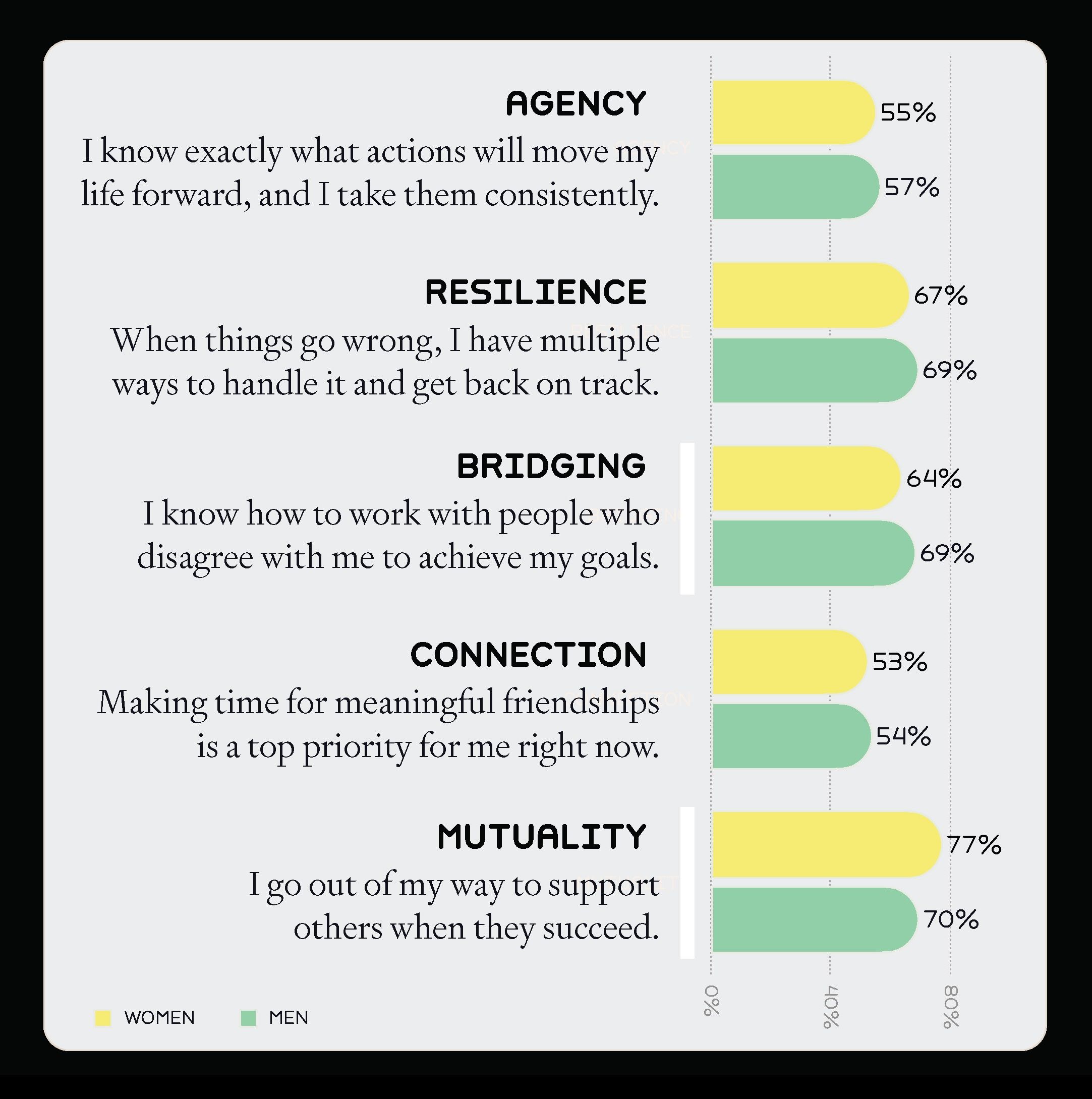 5 beliefs that signal flourishing for men and women
The two biggest gaps in the chart above cut both ways: men lead slightly on bridging and women on mutuality. Other correlated flourishing concepts we tested help unpack the difference. Women are more comfortable turning to close friends for support, a gap that echoes existing research on gendered ways of seeking help. Men, meanwhile, are more likely to see raising kids as a pathway to the good life.
It’s not that one gender is doing emotion or connection wrong and needs fixing. Each faces gaps in their flourishing, and seeks support for them differently.
We created five audience segments to describe men in the U.S. clustered by flourishing baselines, values, media behavior, and attitudes to concepts like gender and relationships, based on a 3,000-person survey.
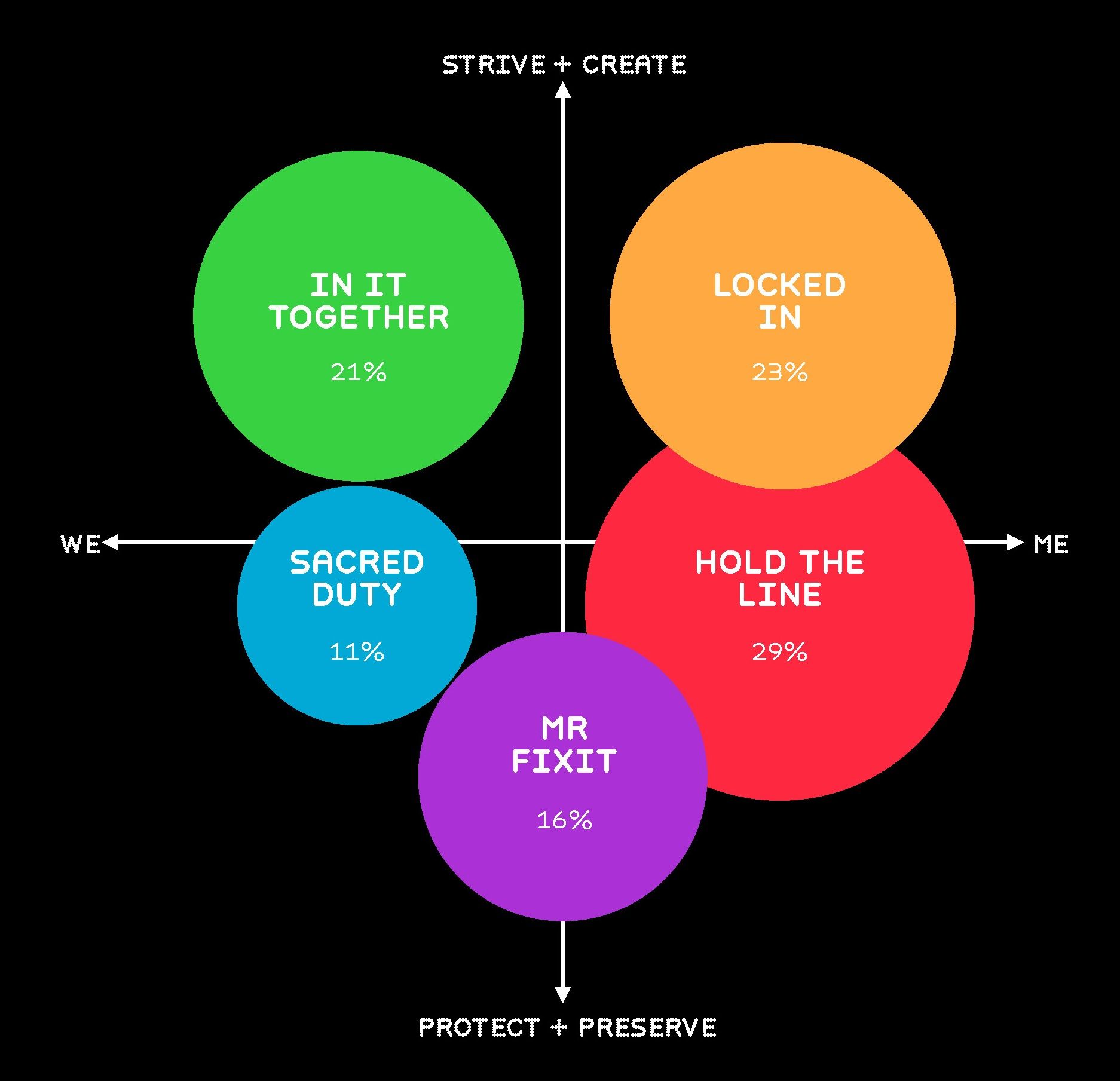 5 audiences of men with percentages denoting size within our nationally representative sample
We map these segments on a values architecture derived from Shalom Schwartz’s theory of basic human values. You can learn more about these values-based audiences here. The x-y axes run from a collective focus on the left (“We”) to an individualist focus on the right (“Me”); and from conservation and tradition below (“Protect & Preserve”), to creativity and innovation on top (“Strive & Create”).
Each segment in the report has a full profile: distinctive streaming media and YouTube, demographics, attitudes and core beliefs, and flourishing baselines.
This segmentation is intended as a tool for conceptualizing how to reach and support men through media, to grow their own flourishing. Understanding audiences in this way makes it possible to imagine successful future interventions.
When we tried to derive a manosphere from the actual behavior of men on YouTube, we did not find a rabbit hole or a coherent monoculture of content, channels, or influencers dominating men’s media. Instead, we found that most men who engage core manosphere channels also consume all sorts of other media, like CNN, Fox News, Saturday Night Live, or ESPN, to name a few.
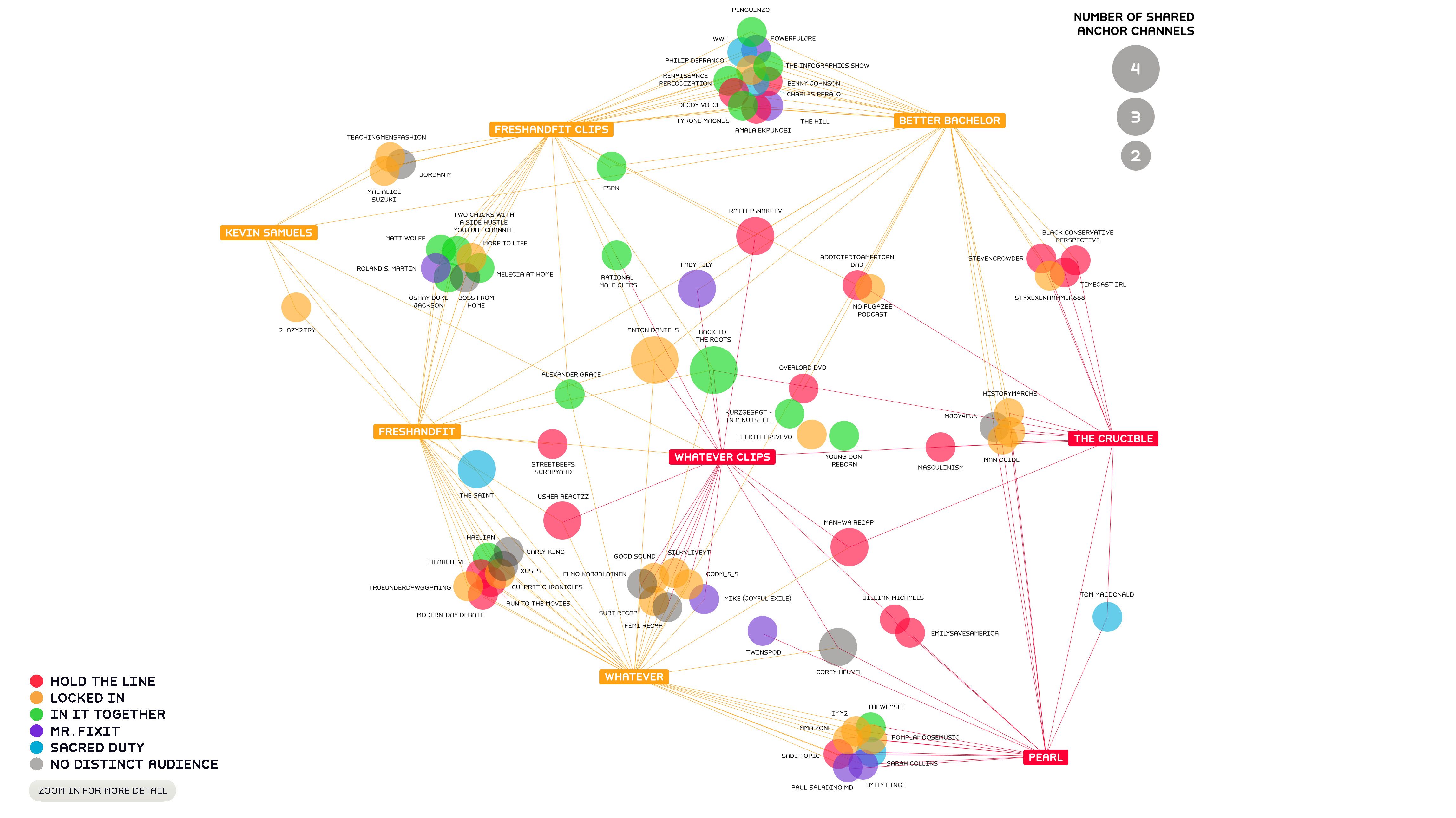 Engagement networks for audiences on YouTube
And we found that engagement with the gender-grievance and misogyny content we looked at is rare for all audiences via source channels. Which means tactics to redirect men’s attention elsewhere are probably superfluous. Most of the time men’s attention is already elsewhere.
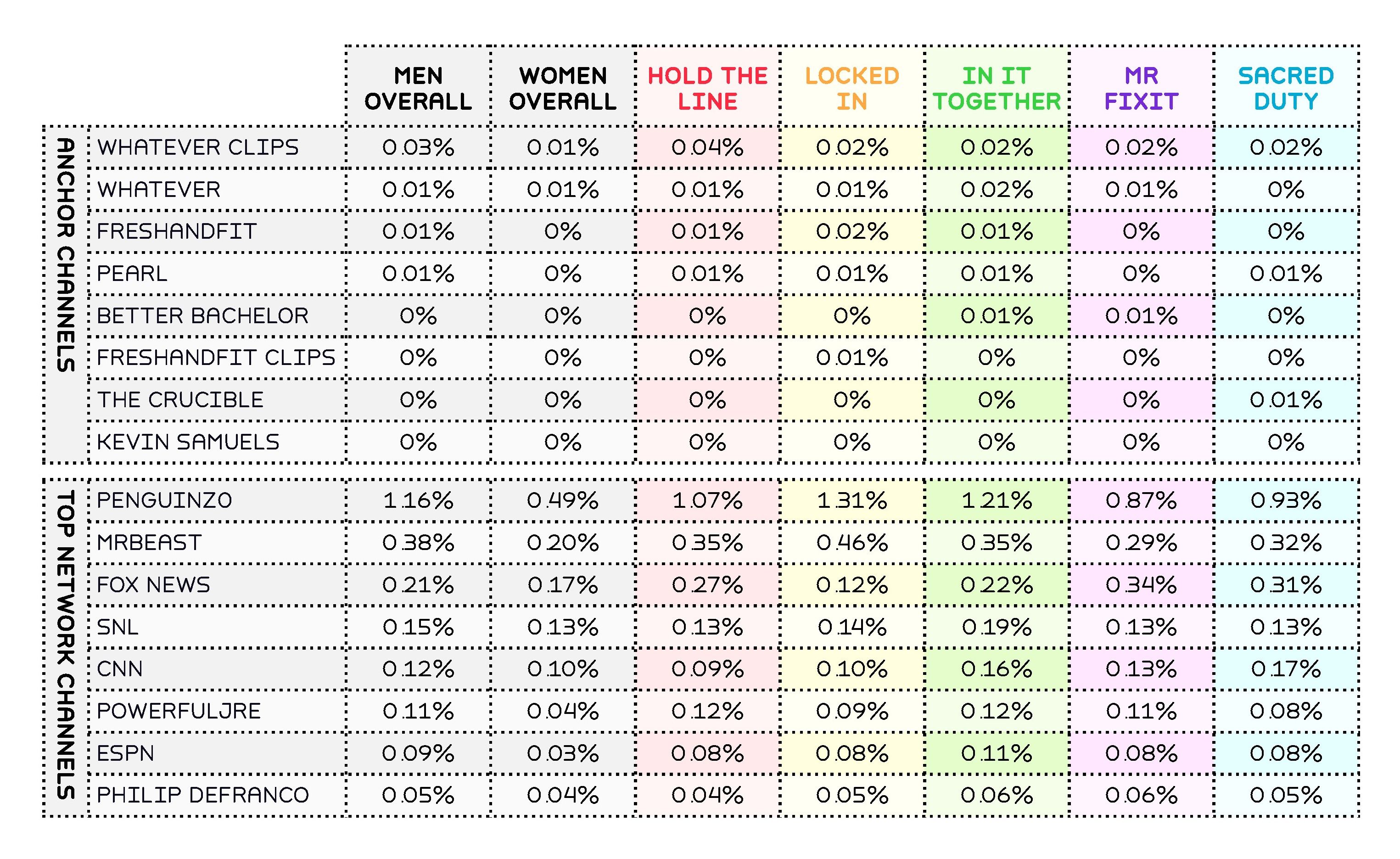 Channel reach for example channels used in our study
It may be time to retire the metaphors of the rabbit hole and the content monoculture, in favor of a more accurate view of the problem and solutions fit to purpose.
We sampled 32 videos from men’s media diets for testing, from fitness and firearms content to philosophy and gaming play-alongs. From the results, we derived a set of design principles, with examples in the full report.
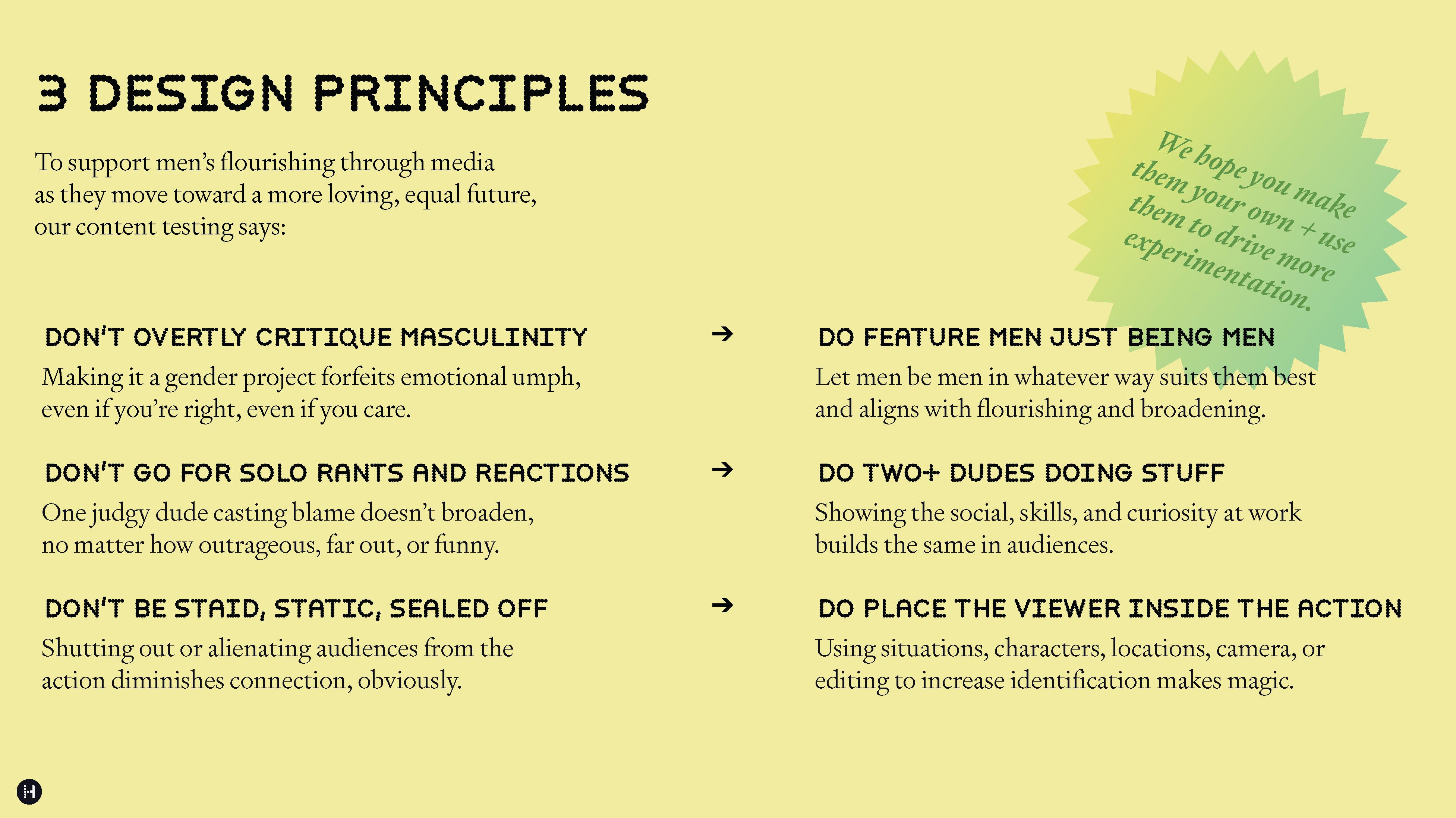
Learn more about the insights we uncovered in the full report, Men’s Flourishing + Media: How online media behaviors relate to flourishing for 5 audiences of men.
We also have a forthcoming companion study, 🍆+ 🌽 A Study of How Men Engage With Porn Online. Despite the self-reported centrality of porn to many people’s media lives, there have been few studies on porn engagement using large-scale, cross-platform internet data. Subscribe here to be notified when this new study is published.
Want to learn more, or get involved in this work? Get in touch.