Capturing Curiosity at the Bad Bunny Superbowl
2026-03-30
A year ago, Harmony Labs launched the Narrative R&D Lab, a three-year initiative built on the premise that the practice of narrative change lacks shared, reusable narrative infrastructure for learning what stories actually work in real media environments. Organizations largely start from scratch with research each time, and when campaigns end, those insights remain siloed or disappear. On top of this, fragmentation makes it difficult for the field to build toward shared narrative goals, and without the audience development and distribution capacity to match, even well-crafted stories struggle to break through.
The Lab’s first topic focus was Economic Mobility and Opportunity (EMO). Here we break down what we set out to build, what we learned, and why the Lab’s next topic focus is AI.
The field tends to invest in research, and far less in the creative, distribution, and learning infrastructure needed to put that research to work at scale. Even where strong capacity exists, the gaps often show up at the handoffs: research insights don’t become usable briefs, strong content gets produced without the distribution strategy to reach the right audiences, campaigns measure reach but not audience fit. When things don’t work, failures go undocumented and learning doesn’t accumulate across organizations or funding cycles.
A few practitioners bridge these gaps instinctively, but the field can’t scale individual genius. Up until now, what’s been missing is shared, practitioner-tested infrastructure, which is exactly what the Narrative R&D Lab set out to create.
In Year One, we built it: audience mapping tools drawing from 8M+ data points, a faster and more cost-effective content testing platform that collected over 1.1 million responses from 32,000+ participants, creator briefing systems, and diagnostic tools to identify audience fit before production begins—all tested through live campaign experiments with media partners including NowThis Impact, BuzzFeed, ParentsTogether, and Plus Más. What we built works, and it carries forward.
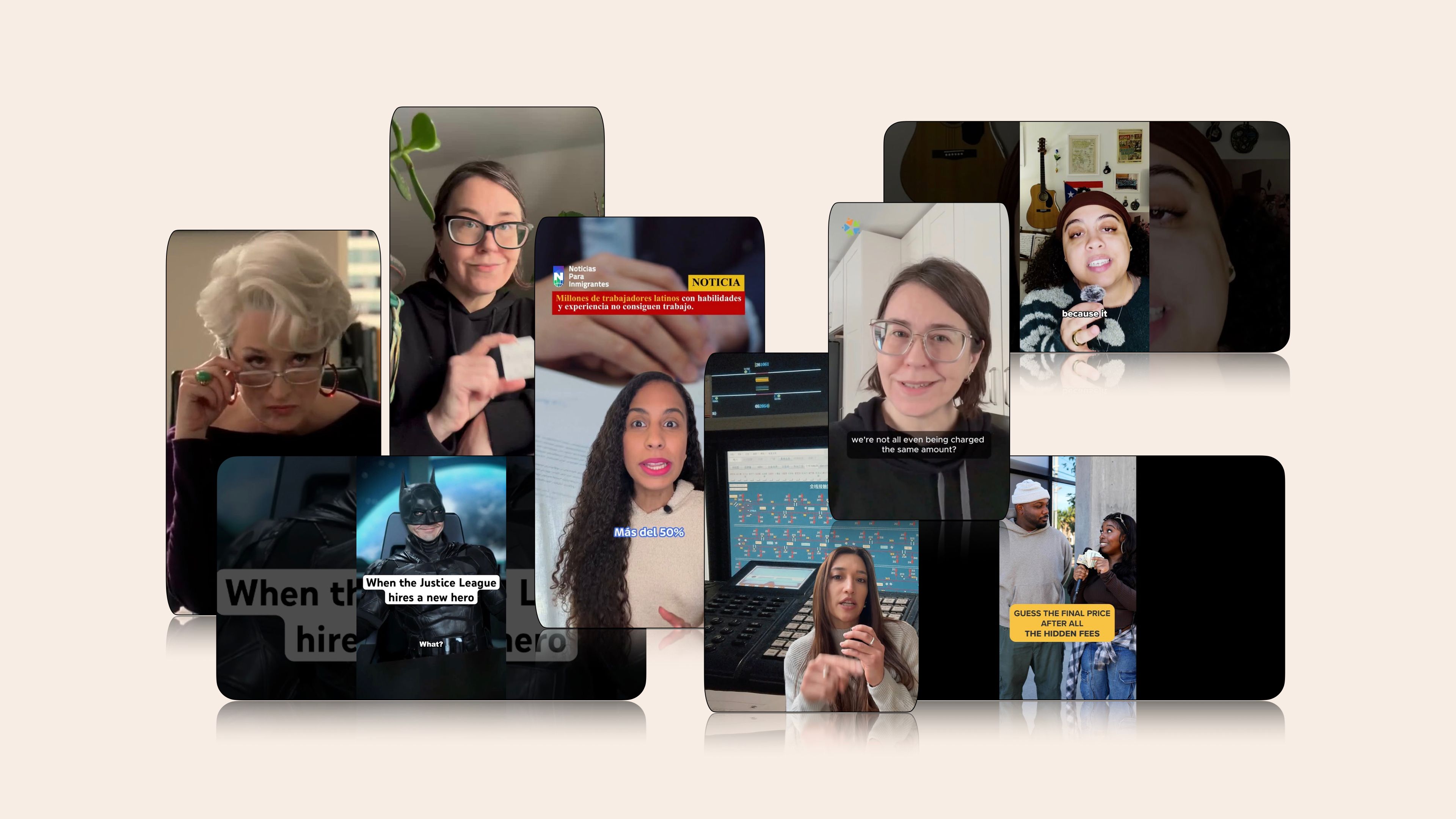
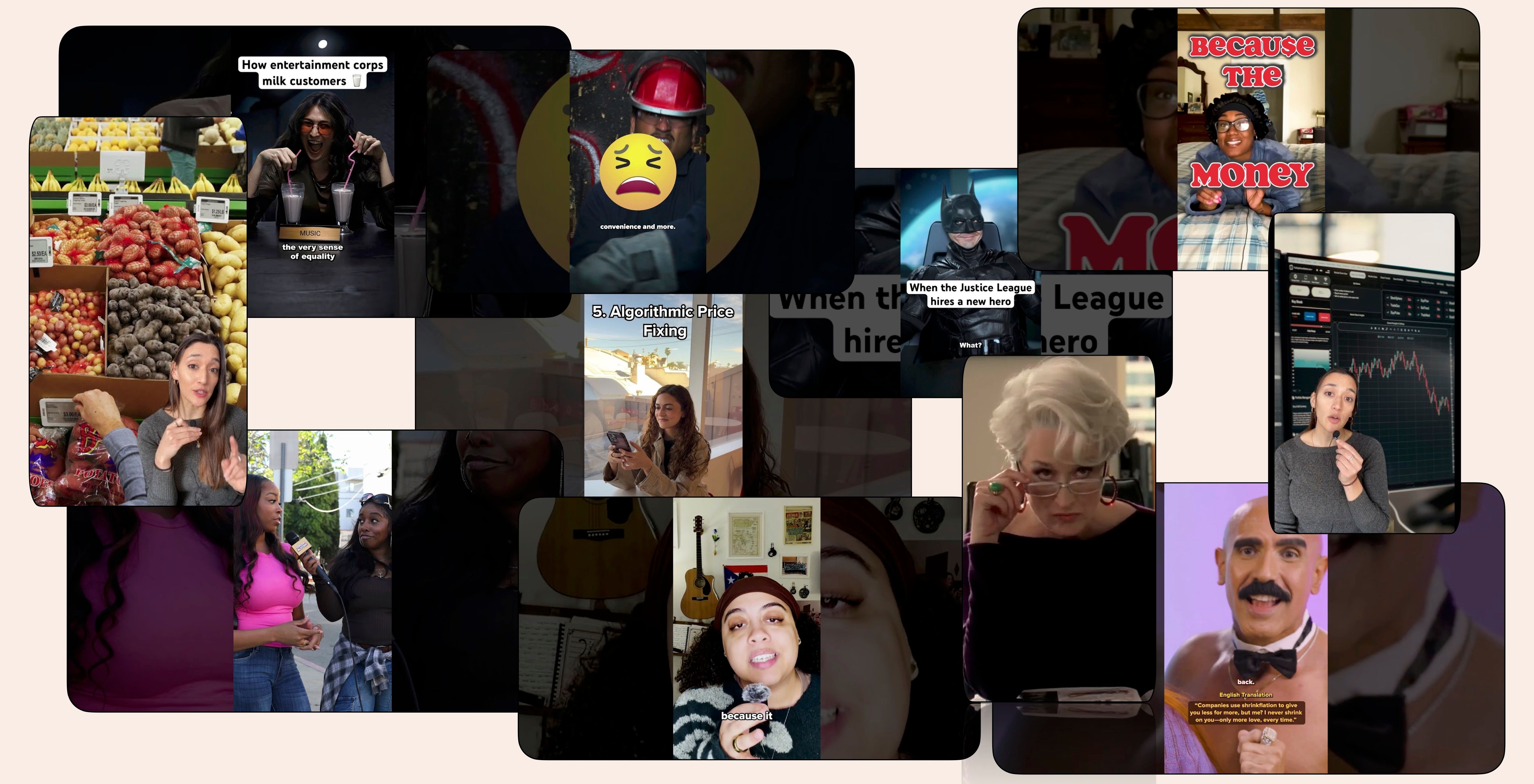 A sample of content we made and tested with real audiences.
See some of the content that was made with media partners across multiple platforms, tested with real audiences and covering everything from corporate pricing and consumer rights to skills-based hiring.
In working directly with media partners and organizations acting as campaign sponsors, three patterns emerged, mainly from the process of making content.
We developed a shared narrative goal in collaboration with a panel of subject matter experts through a research-intensive process that involved a strategic review of existing materials on economic mobility, poverty, and flourishing, and creating a shared measurement framework. It produced real value, but it also taught us this level of centralized coordination is hard to sustain, and harder still for field partners to plug into at scale. Future iterations of narrative goal-setting might need lighter-weight, more emergent ways for narrative hypotheses to be formed collaboratively and translated into measurement infrastructure for content testing.
When organizations treat creators as executors of a brief, they miss what creators actually know: their own audiences. The work that succeeded treated creators as co-designers, bringing them into the workflow early instead of handing over finished documents. In practice, that meant evolving our briefs from lengthy research downloads into focused creative direction grounded in plain-language context, real world examples, clear guardrails on tone and format, and a follow-up call for clarifying priorities. That shift has to be structural, and it means building tools that work at the production stage, not just the strategy stage.
The field’s default question tends to be: did this content work? The question the Lab is designed to ask is: will this work for the right people, before we spend resources producing it? We saw this clearly in one of our first campaign experiments. Overall persuasion numbers looked strong. But the specific audience that mattered for the campaign’s goal barely moved, because they made up only about 20% of our media partner’s viewership, with most skewing more progressive and politically engaged. Without audience mapping upfront, those strong performance numbers would have led us to call it a win, missing that we’d probably reached the wrong people. This is a core diagnostic failure the Lab exists to prevent.
These learnings also revealed that the Lab’s value isn’t in producing content, but in building the diagnostic and collaborative infrastructure that makes content more likely to reach and move the right people. Over the next year, we’ll be sharing findings from some of the content we tested.
Stay tuned for more lessons from the Year One campaigns.
AI is advancing rapidly across civic life, education, professional preparedness, work and the economy. Any one of these domains brings with it a new set of narrative challenges that look a lot like the ones we just spent a year learning to diagnose. That creates a natural moment for us to test how our work could transfer and evolve into new spaces, like, say, AI and education.
What makes this moment particularly interesting is that narratives around AI are fragmenting rapidly and haven’t hardened yet; the window to shape how these narratives develop is open. Organizations are grappling with a new set of questions: how will AI change their work, and how do they tell stories about that shift in ways that actually land with their audiences? What will an AI-enabled future look like, and how do we prepare for it, as organizations, as practitioners, as parents, as a society? Most don’t yet have the diagnostic capacity to answer those questions systematically—to identify what narrative goal they’re working toward, and whether their approach reaches the audiences that matter for that shift.
For 2026-2027, the Lab will work on AI as both a subject (which stories move which audiences) and as a tool (how AI integration can improve the narrative workflow itself). The goal is to create an experimentation model that truly transfers across domains. The methods we build here should outlast the topic.
The Lab’s next phase is organized around a Community of Practice: an intentionally assembled, working cohort of practitioners who put the Lab’s tools to work in real campaigns, stress-test them across different contexts, and make sure what we learn travels beyond the Lab.
The single criterion for membership is willingness to put real work on the table, including what didn’t work.
These practitioners span the full narrative workflow: AI domain experts, audience and identity researchers, experimental narrative practitioners, creators and creator organizers, distribution and systems operators, and learning-oriented funders.
Stay tuned for an announcement of our cohort shortly. In the meantime, if this work resonates—whether you’ve run campaigns that keep hitting the same walls, worked on AI narratives, or funded organizations trying to move public understanding—sign up to get more updates on the Narrative R&D Lab.
***
This project is supported in part by the Gates Foundation. The views expressed here do not necessarily reflect the views of the foundation.